
When I started my business in 2008, the content management system market was still buzzing about platforms like Joomla and Drupal. There were also many custom-built CMSs around. WordPress had just released version 2.3, but only a handful of developers in Finland were using it. I was among the few who were already building WordPress-based websites at that time.
WordPress has its roots in the golden age of blogging, and using it for anything other than blogging wasn't yet on anyone's radar. Today the situation is very different, and WordPress's market dominance is quite clear. WordPress, by its own claim, powers around 43% of all websites on the internet. Even non-developers know its name and interface. For some, the name brings positive associations; for others, a cold sweat or a deep sigh.
WordPress is popular, but it has its own challenges
It is possible to build quality WordPress websites. By quality I mean sites that are fast, accessible, and secure. Unfortunately, not all WordPress sites are built to a high standard. The most common problems with WordPress sites are idiosyncratic developer solutions, slowness due to large numbers of plugins, and the resulting security and compatibility issues.
Over the years I have witnessed others' work on several occasions where the logic of articles and pages was, to put it mildly, illogical, and updating the site was far from an intuitive or enjoyable experience. Despite WordPress's market dominance, there are other content management systems in the world that are at least as good — or in my and my clients' opinion, even better. One of these alternatives is Kirby.
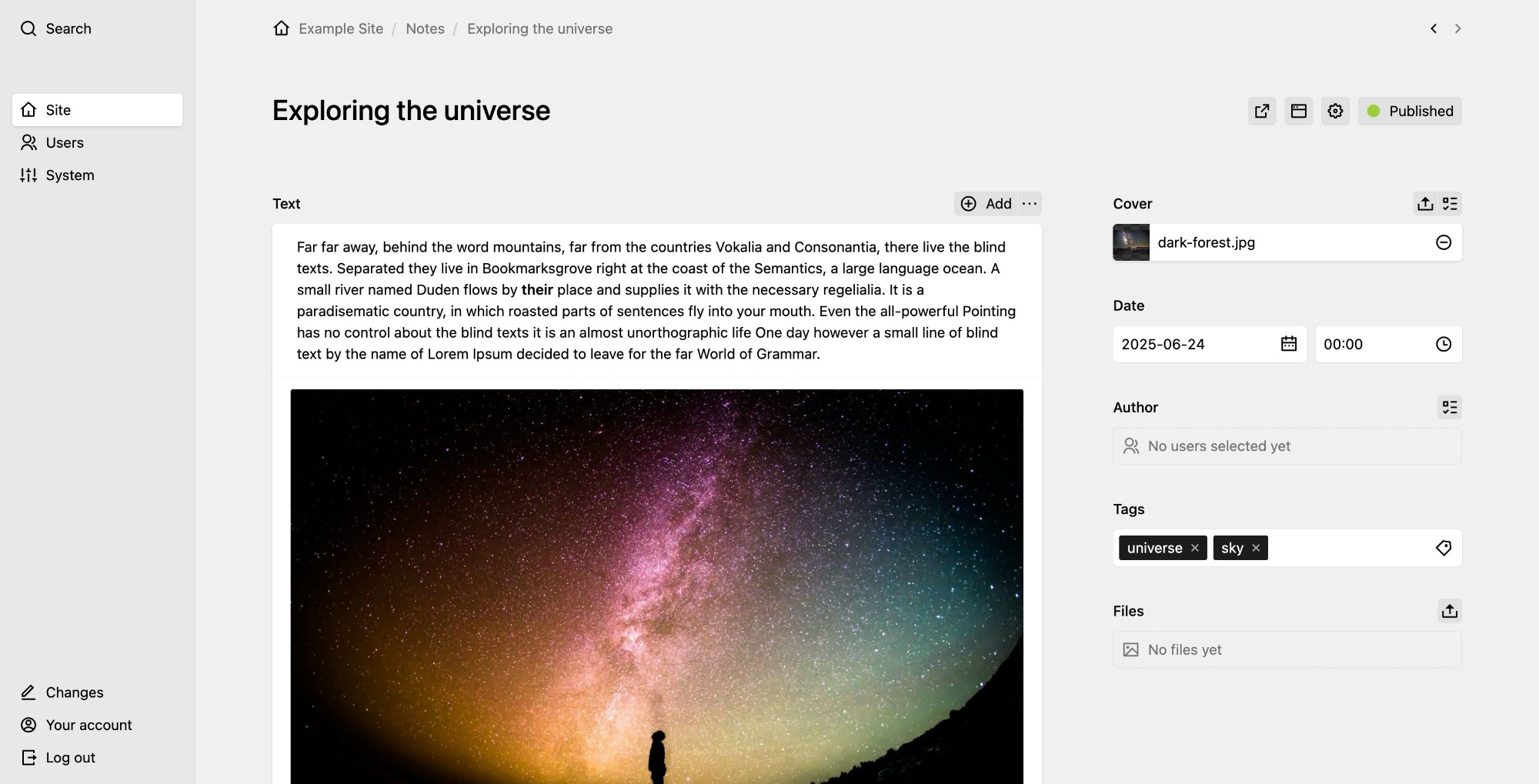
Kirby is a content management system that adapts to your needs
Kirby is a content management system developed by the German company Content Folder GmbH & Co. KG, with its first version released back in 2012. From the very beginning, Kirby has been minimalist in style while being extremely powerful in features and easily adaptable to different needs.
WordPress websites quite commonly contain many pages and various settings that the person managing the site rarely actually needs. One of Kirby's greatest advantages is its adaptability. It provides an admin panel that the site developer can tailor to include only the fields, features, and settings that are needed. Everything non-essential can easily be removed, leaving the site manager with an intuitive and easy-to-learn interface. When using Kirby's admin panel, you rarely run into the thought "now where was that again?".
Power without the bloat
Kirby handles all the essentials you'd expect from a modern website, such as forms, search engine optimisation (SEO), and various media including images, video, and audio. Multilingualism is also one of the system's strengths, as switching between language versions has been made very straightforward. Metadata that doesn't differ between language versions also only needs to be defined once. This saves you time and frustration.
From a maintenance perspective, Kirby is lighter and cheaper than WordPress. WordPress and its plugin updates require particular vigilance around potential incompatibilities, which in the worst case can break the site. A Kirby-based website requires fewer plugins by default — though they are available when needed. The site breaking during an update is genuinely rare, and the reason lies in the system's good structural design.
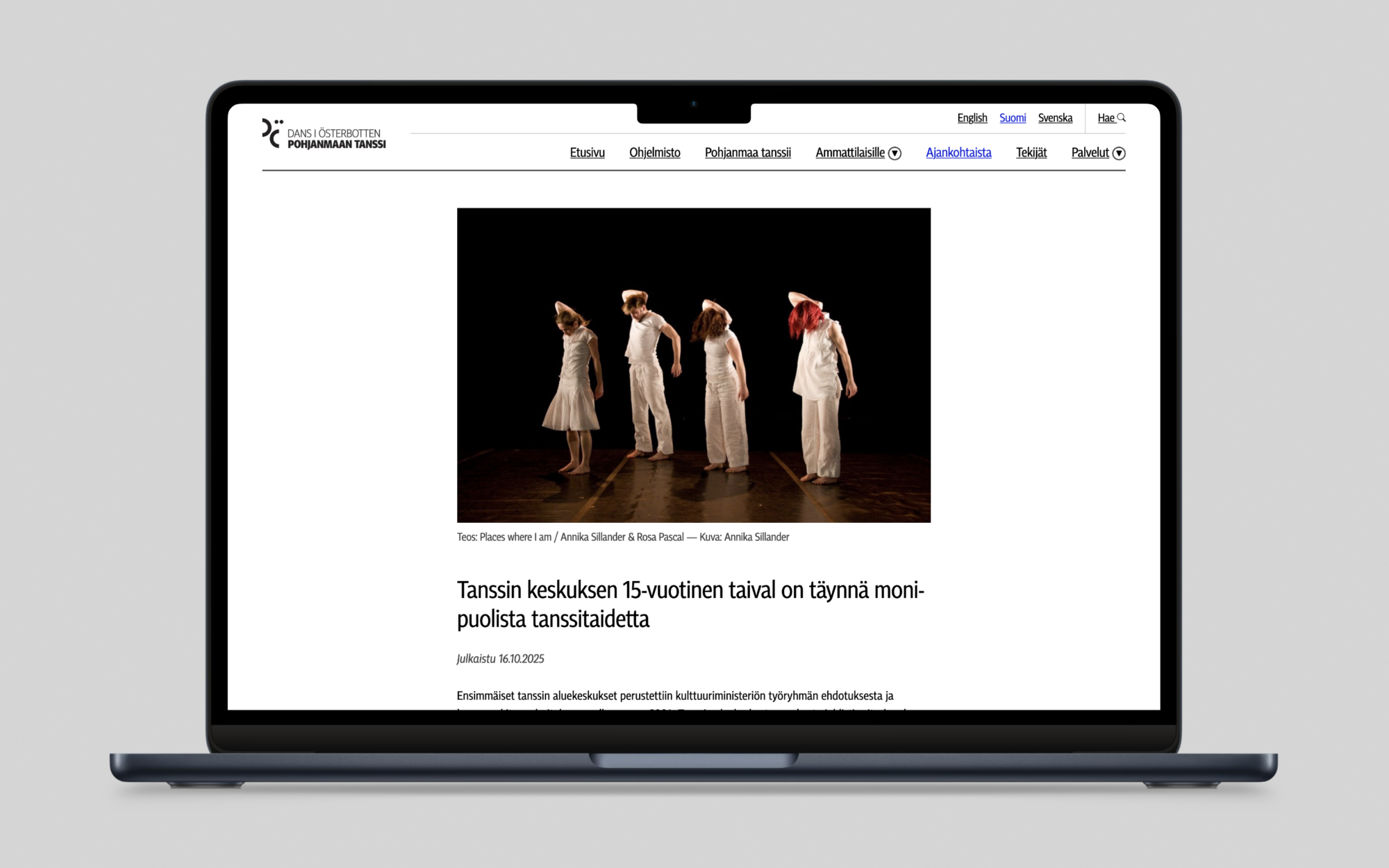
In Finland there are still relatively few Kirby-based sites, but worldwide the system is used by many large organisations including Bauhaus, RedBull, and the University of California. According to Kirby's own figures, the system powers over 40,000 different websites.
If a website redesign is on the agenda for your association or company, get in touch and let's explore whether we could build it together using Kirby.
Learn more about KirbyLink opens in a new window and browse websites built with KirbyLink opens in a new window.